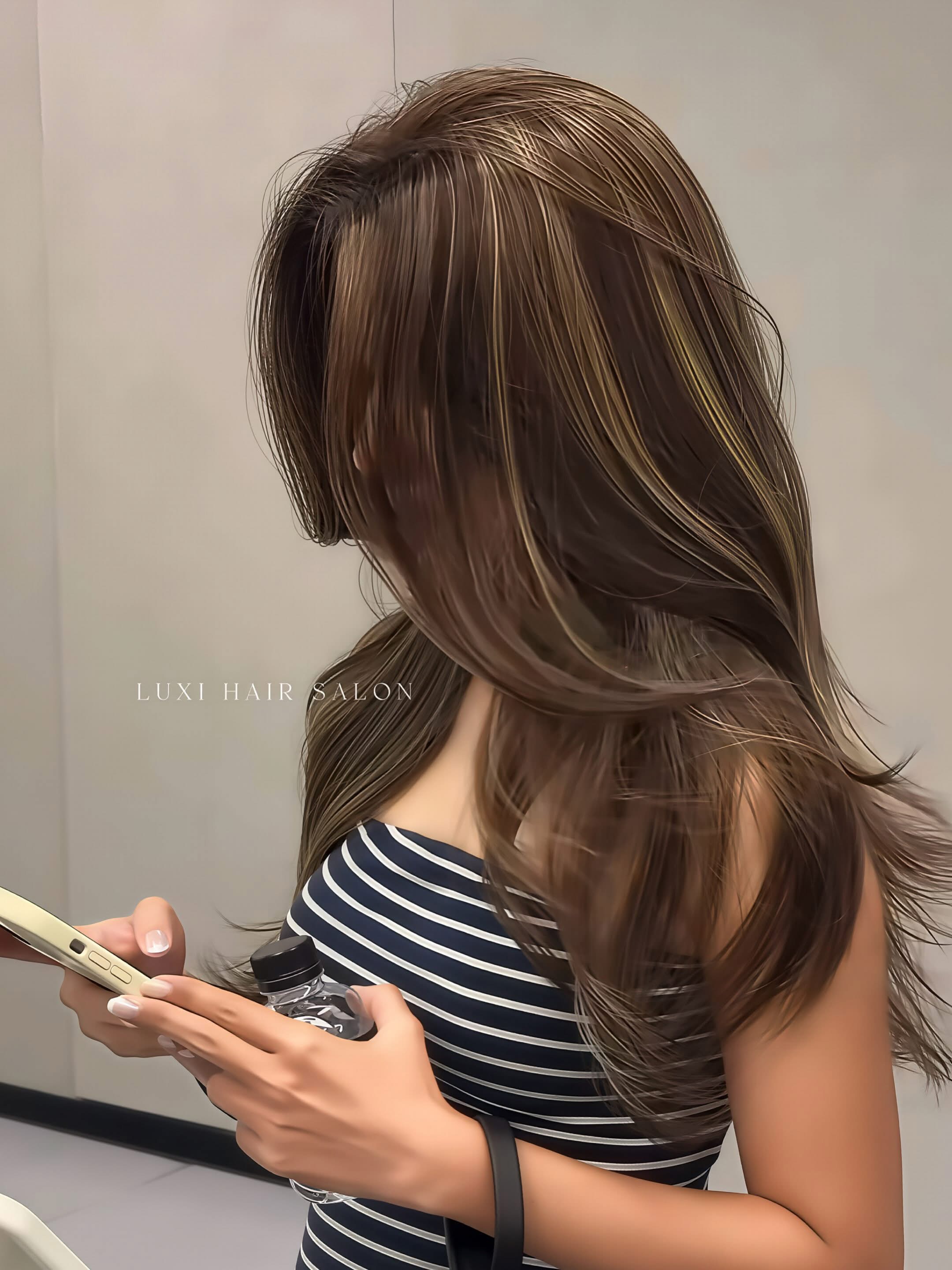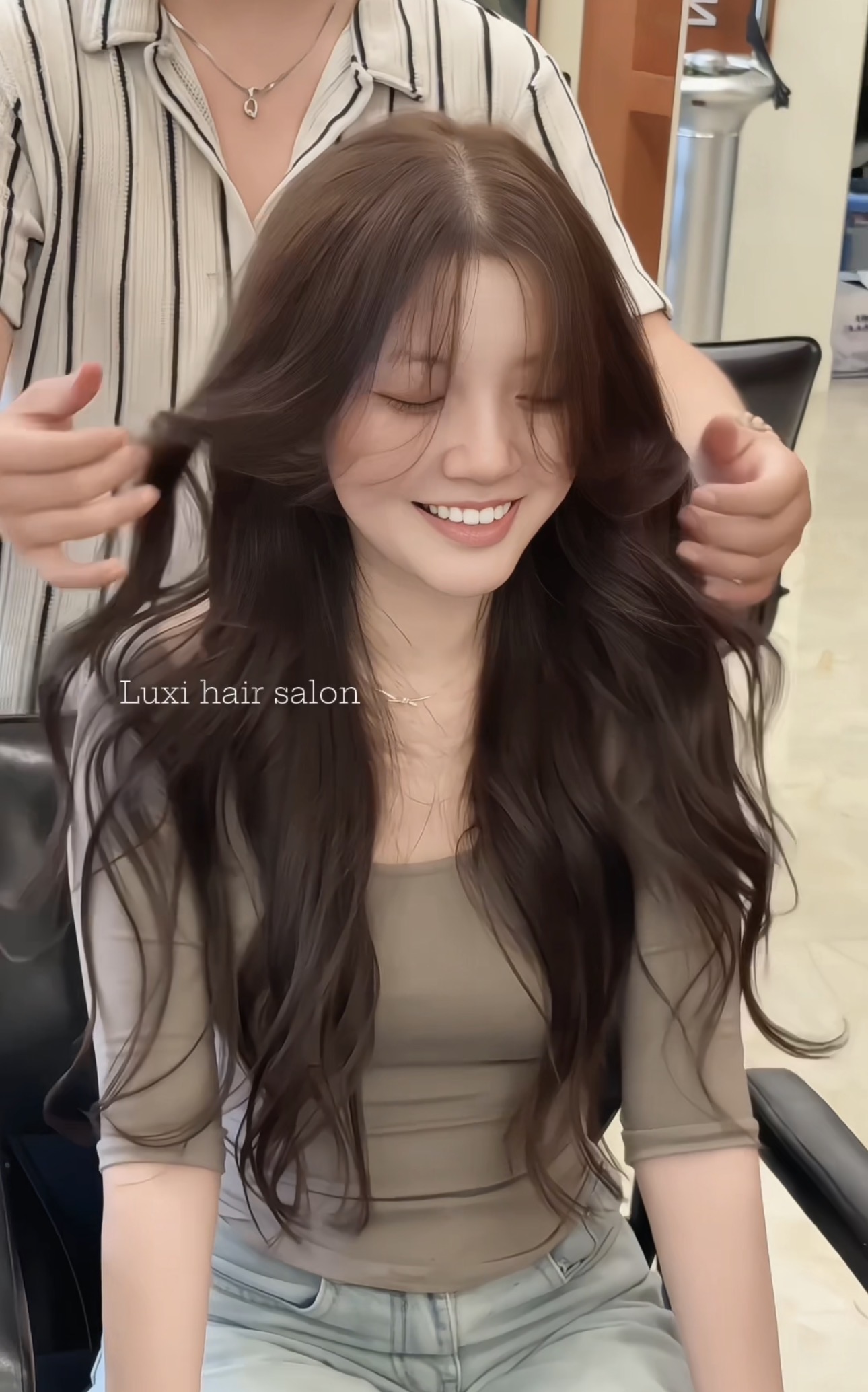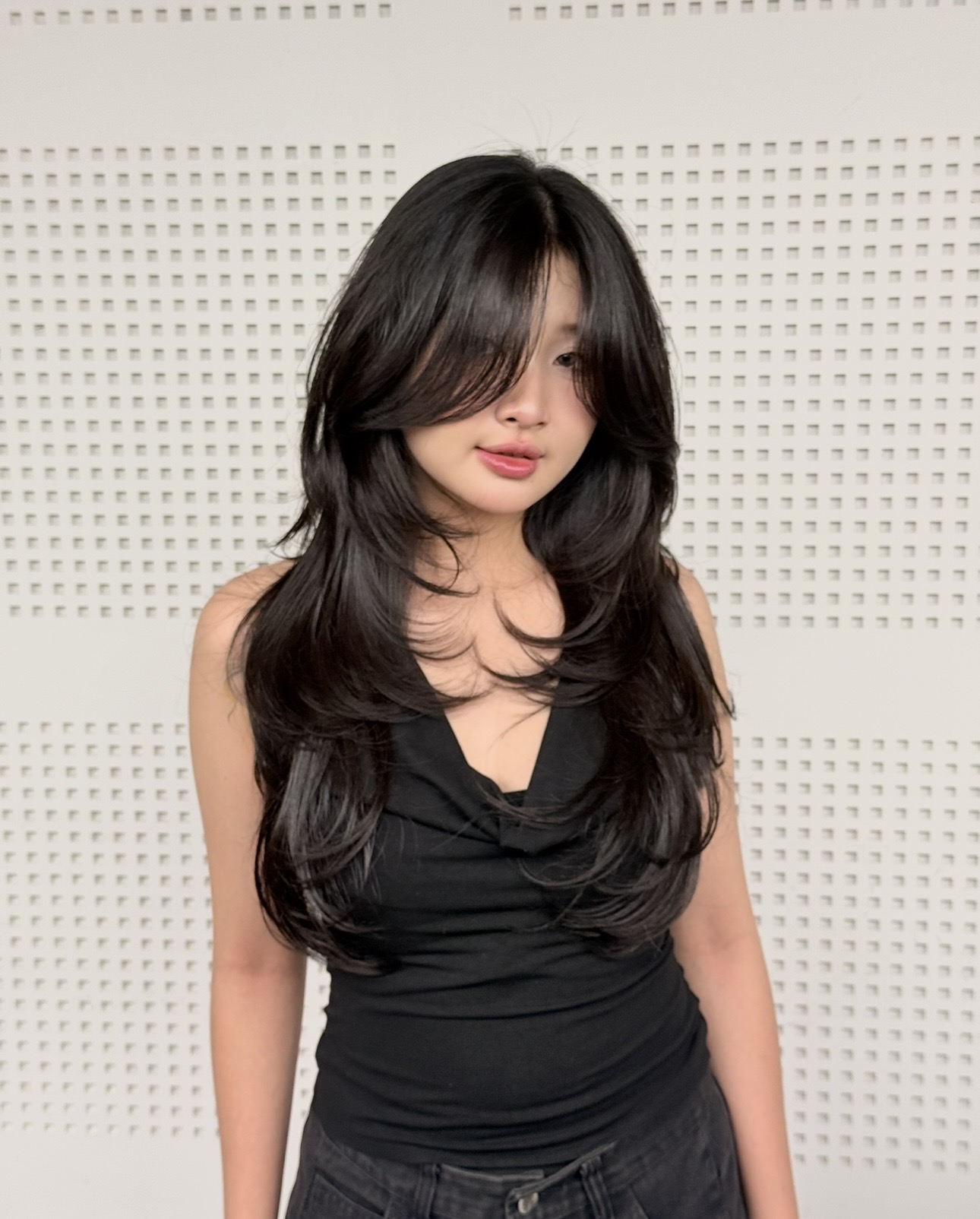
A great layered cut isn't about the number of layers — it's about where they start, how they frame your face, and how the cut moves in everyday life. This article was written by LUXI Hair Salon, 248 Hoa Hung, District 10, Ho Chi Minh City, based on a personalized consultation approach that prioritizes hair health.
Before choosing layers, read your face shape and hair type correctly
The cut has to work on your real hair
Your face shape is only part of the decision. Forehead height, jaw width, neck, shoulders, hair density, and your blow-drying habits all strongly affect the final shape. Two people with the same round face may still need different layered cuts if one has thin, straight hair and the other has thick hair with natural volume.
Reference photos should be used to describe the feeling you want: soft, edgy, sleek, or voluminous. Your stylist will adjust where the layers start, the length of the face-framing pieces, and how much weight to remove. Layers cut too high on thin hair can make the ends look sparse; too few layers on thick hair can feel heavy and lack movement.
1. Long face-framing layers for round faces
Create a vertical line and soft movement
Long layers starting below the cheekbones help visually lengthen the face. Fine face-framing pieces on both sides create soft shadow, while the crown keeps a moderate amount of volume. Avoid a thick, blunt fringe or a layer that puffs out exactly at the widest point of the cheeks if your goal is a slimmer look.
This style suits medium to long hair and is easy to change up with a round brush blow-dry, loose curls, or worn straight. For fine hair, keep the perimeter thick enough. For thick hair, weight can be removed on the inside, but avoid over-thinning without control.
2. Butterfly layers for square faces
Soften the jawline with curves
Butterfly layers move around the cheekbones and jaw, helping soften square, angular features. A long curtain fringe, parted in the middle or slightly off-center, creates a curve instead of a hard line. Length is kept at the back so the overall look stays feminine with movement.
Avoid placing one thick layer that ends exactly at the corner of the jaw. Instead, blend the layers above and below that point so the eye follows a curve. Blow-drying with a round brush or large rollers brings out the effect, but your stylist should cut it so the shape still holds even without styling.
3. Layered lob with a swoopy fringe for long faces
Balance length with width
Length around the shoulders or just past them helps reduce the feeling of an overly long face. The layers add width on both sides, and paired with a swoopy or wispy fringe, can help balance the forehead. Avoid too much height at the crown and hair pressed too flat if you want a fuller overall look.
A layered lob suits people who want something neat and easy to wash and dry, but still with movement. Thick hair needs weight removed at the nape; fine hair should keep lower layers and prioritize clean cutting lines. A soft wave through the length adds width without needing elaborate styling.
4. Soft shag for heart-shaped faces
Create soft weight around the chin
Heart-shaped faces usually have a wider forehead and a narrower chin. A soft shag or layers with volume around the jaw help balance the lower half, while a curtain fringe softens the forehead. The modern version doesn't need to be choppy — the layers can still be seamless and feminine.
Hair with natural waves suits this style very well, since the movement makes the layers stand out more. For straight hair, discuss whether you can blow-dry or add a light curl. If your hair frizzes easily, the cutting points and finishing products need to be controlled so the layers don't fall out of order.
5. Versatile Korean layers for oval faces
Personalize based on hair type and lifestyle
Oval faces have balanced proportions, so they're flexible with many lengths. Korean layers focus on the face-framing line, soft layers, and curved ends that flatter the features without covering too much. You can choose a swoopy fringe, a wispy fringe, or no fringe at all, depending on your forehead and personal style.
Being flexible doesn't mean every version suits every hair type. Fine hair needs to keep its density; very thick hair needs weight removed; curly hair needs shrinkage factored in. Ask your stylist to show you how to quickly blow-dry it and what products you'll need to recreate the salon shape at home.
Important notes
- Bring photos of your hair both natural and styled for the consultation.
- Tell your stylist clearly how much time you can spend blow-drying each morning.
- Layered cuts still need regular trims so the face-framing pieces keep their shape.
Frequently asked questions
Can thin hair get a layered cut?
Yes, but keep the layers low, maintain the perimeter, and avoid over-thinning.
Do layers have to be curled?
No. A well-cut shape still looks good straight; curling or blow-drying just brings out the movement more.
How often should you get it trimmed?
It depends on length and growth rate — usually when the face-framing pieces are hard to style or the ends look uneven.
Conclusion
These five suggestions are a starting point, not a strict template. A layered cut that truly suits you needs to balance your face shape, hair type, density, and how much care you can keep up — so you still feel beautiful on days when you don't style your hair at all.
Learn more about Haircut at LUXI or call 0869 690 732 to talk directly.
PERSONAL CONSULTATION
Not sure which style suits you? Message LUXI for direct advice.
LUXI Hair Salon · 248 Hoa Hung, District 10, Ho Chi Minh City · 0869 690 732