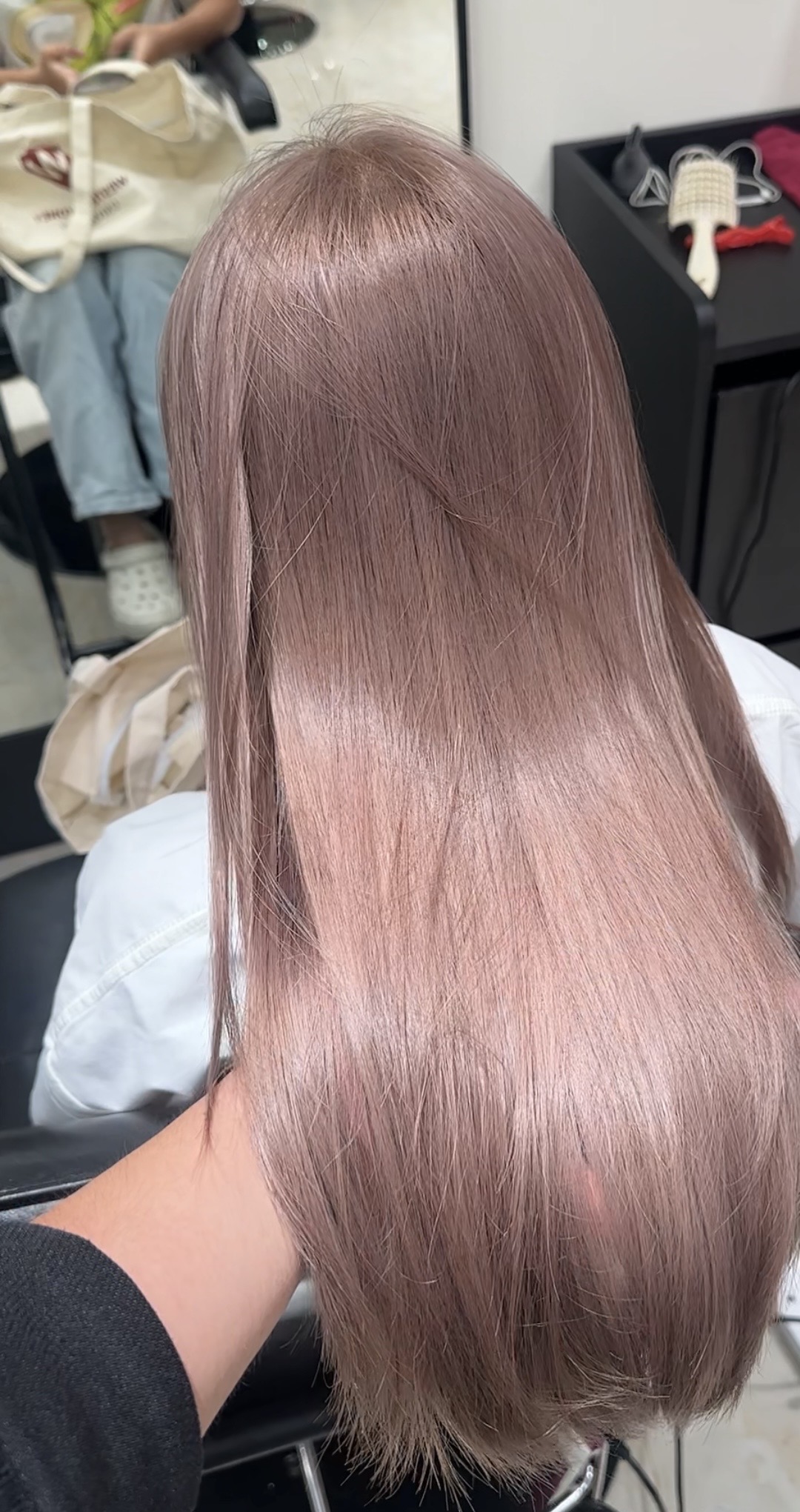
Dryness, porosity, loss of elasticity, and increased breakage are signals to reassess your hair care routine before continuing with more chemical treatments. This article was written by LUXI Hair Salon, 248 Hoa Hung, District 10, Ho Chi Minh City, based on a personalized consultation approach that prioritizes hair health.
Telling the difference between dry hair and structurally damaged hair
Not all rough-feeling hair needs an intensive treatment
Dry hair can be caused by a lack of natural oils, weather, overly harsh washing, or heat styling; after a treatment, it usually softens and still holds its elasticity. Structurally damaged hair tends to be porous, tangles easily, loses shine, stretches abnormally, or breaks under light pressure. Both conditions can appear at the same time but need different approaches.
Touch alone isn't enough to tell. Silicone can make the surface feel smooth temporarily while the inside is still weak; on the other hand, naturally curly hair is often drier but not necessarily damaged. Your stylist needs to review your chemical history, test elasticity in several areas, and look at how uneven the condition is from root to tip.
Six signs worth assessing for deep recovery
Look at both severity and location
Signs worth noting include breaking more than usual, split ends spreading higher up, tangling right after brushing, a frizzy surface even after conditioning, wet hair stretching like rubber, and color fading unevenly and fast. Some dryness after bleaching or coloring is normal, but when several signs appear together, you shouldn't continue with more chemical treatment before getting checked.
Observe by area. Hair around the face and crown usually gets more heat and sun exposure; the ends have a longer chemical history than the roots. The right treatment plan may need to focus differently rather than applying the same amount of product across the whole head.
What can deep recovery treatment do?
Improvement has limits, and that should be clear
Depending on the condition, a treatment can focus on hydration, adding structural support, reducing surface porosity, and improving combability. The visible result is usually softer, shinier, less tangled, more manageable hair. Some bond-building products help the hair strand stay more stable after chemical treatment.
However, recovery treatment doesn't permanently seal split ends and can't turn burnt hair back into virgin hair. Cutting away severely damaged sections is sometimes the necessary choice. Good results come from combining the treatment with trimming, reduced heat, and at-home care — not from a single session alone.
When should it be done before or alongside a color service?
Hair health sets the limit on technique
If hair is weak but still workable, your stylist may suggest preparing the base with pre-color treatment or incorporating protective products during the process. The goal is to reduce risk and keep the hair surface stable — not to allow lifting beyond a safe limit.
If a strand test shows loss of elasticity, breakage, or an uneven reaction, it's better to scale back the color goal, split it into multiple sessions, or pause. A slower color plan that keeps hair thick and shiny is always more valuable than reaching a light color right away and then having to cut off the damaged hair.
Building a care schedule after recovery treatment
Track how your hair responds instead of following trends
At home, use a shampoo suited to your scalp, conditioner for mid-lengths to ends, a mask as needed, and heat protection. Watch your hair over two to three washes to see if the softness holds. If hair feels stiff after protein, reduce frequency; if it feels too soft and stretches easily, the balance needs reassessing.
Your salon schedule depends on the level of damage and your upcoming chemical plans. You don't need frequent, intensive treatments if your hair has already stabilized. At LUXI, we prioritize an in-person check, explain clearly what a product can and can't do, then suggest a schedule that's just enough — avoiding unnecessary cost.
Important notes
- Pause bleaching, straightening, or perming when hair loses elasticity.
- Don't combine too many protein products at once without understanding your hair's needs.
- Cutting away heavy split ends helps stop tangling and breakage from spreading upward.
Frequently asked questions
Is one recovery treatment enough?
It depends on severity. Mild dryness can improve noticeably; chemically damaged hair usually needs a combined plan of at-home care and trimming.
Does recovery treatment straighten hair?
A genuine recovery service isn't meant to change the hair's structure like straightening does. Hair may look smoother simply because the surface is more stable.
Does healthy hair need deep recovery treatment?
Not necessarily. Adequate maintenance nourishment and heat protection may be more suitable than an intensive treatment.
Conclusion
Hair needs deep recovery treatment when dryness and porosity come together with loss of elasticity, tangling, and increased breakage. An accurate assessment helps you choose between hydration, structural support, trimming, or pausing chemical treatments — avoiding overtreatment that doesn't actually solve the real problem.
Learn more about Hair Recovery at LUXI or call 0869 690 732 to talk directly.
PERSONAL CONSULTATION
Not sure which style suits you? Message LUXI for direct advice.
LUXI Hair Salon · 248 Hoa Hung, District 10, Ho Chi Minh City · 0869 690 732